


If you’re a person dealing with clinical anxiety, you have likely already tried the most common tools: box breathing, 5-4-3-2-1 (sensory anchoring), meditation, therapy, medication. Indeed, dozens of grounding techniques for anxiety are available to choose from, and it’s a question of what works for each of us.
Today, we’re going to explore a category of these techniques that probably doesn’t get as much attention as it deserves—flow state. They say depression is living in the past, and anxiety is living in the future. Flow state is living in the present moment.

Emma Stone: Antithesis of Anxiety
Actor Emma Stone has had anxiety since she was a young child and has spoken openly about it across several high-profile interviews with the likes of NPR, BBC, and TIME. Like most of us with anxiety, she’s tried many ways of coping with her generalized anxiety and panic disorders.
And like some of us, she has found a few things that really help, including meditation, social connection, therapy, and avoiding social media. But Stone’s most effective support has been improv. She joined a class at her local youth theater at age 11 and felt, for the first time, that her “feelings could be productive.”
Now the 37-year-old actor and producer describes improv as “the antithesis of anxiety.” And this isn’t particular to Emma Stone. Stephen Colbert, Rachel Bloom, and Donald Glover are a few other celebrity performers who cite improv as something that helps them cope with diagnosed anxiety conditions.
There is a scientific reason why improv is such an effective grounding technique for anxiety, which we’ll dig into shortly. But first, a little about anxiety and flow state.
How Does Anxiety Work?
Put simply, anxiety is an overactive threat detection system coupled with a creative imagination. The amygdala flags a threat before the conscious mind can even engage, which fires up the default mode network (DMN). The DMN is the home of mind wandering and novel ideas, which ruminates, turns self-referential, and cannot properly disengage in an anxious brain.

What is Flow State?
Flow state is defined by psychologist Mihály Csíkszentmihályi as:
Being completely involved in an activity for its own sake. The ego falls away. Time flies. Every action, movement, and thought follows inevitably from the previous one, like playing jazz. Your whole being is involved, and you’re using your skills to the utmost.
Csíkszentmihályi coined the phrase in the late 1970s from research focused on artists, athletes, and chess players. Flow state has since found its way into major areas of research, including:
- Organizational psychology
- Cognitive neuroscience
- Autism research
- Trauma recovery

How Does Flow State Help Anxiety?
When we are entirely absorbed in an activity, we aren’t thinking about anything else. The default mode network isn’t available to focus internally or ruminate on what-if’s. Researchers don’t know exactly what the DNM is doing during flow state, but recent papers speculate that it may be contributing to idea generation and integrating input to develop activity relevant material. The important thing is that it isn’t engaging in constant threat interpretation.
Grounding Techniques for Anxiety that Leverage Flow State
Flow state is something that comes more naturally to some people than to others. Csíkszentmihályi identified a subset of the population he called autotelic, who have ready access to flow state. Additionally, more recent research has found that flow state is a powerful sensory regulation for Autistic people, and those with ADHD often access it unintentionally (otherwise known as hyperfocus). It is entirely possible that “autotelic” simply describes a spectrum of cognitively neurodivergent people.
In any case, what can any one of us do on a given Tuesday or Saturday to bring ourselves into flow state and channel that overactive DNM into something other than threat analysis? And what activities might we bring into our lives over time to train our brains for on-demand flow state? Below is our list of five grounding techniques for anxiety, which includes the following data for each:
- What kind of evidence there is for it.
- How quickly it works.
- Why it works.
- How we might capture the benefit of each activity on a busy Tuesday.
#1 Improv
Evidence: empirical
Timeline: acute and cumulative

Why it works: Improv gives people a chance to practice being spontaneous, taking social risks, and making mistakes in a setting where those experiences are expected and welcomed. Research suggests that this repeated exposure, especially learning to become more comfortable with uncertainty, may help reduce anxiety. Play, humor, connection, and the freedom to respond without getting everything “right” may also be part of what makes improv so helpful.
How to do it on a Tuesday: You don’t need to find, pay for, drive to, and attend a theater class. You can play “Yes, and” games with a friend or family member; or if you’re solo, try giving yourself 30 seconds to name three absurd uses for a random object in the room. The point isn’t performance quality; it’s forced improvisation under a short time constraint.
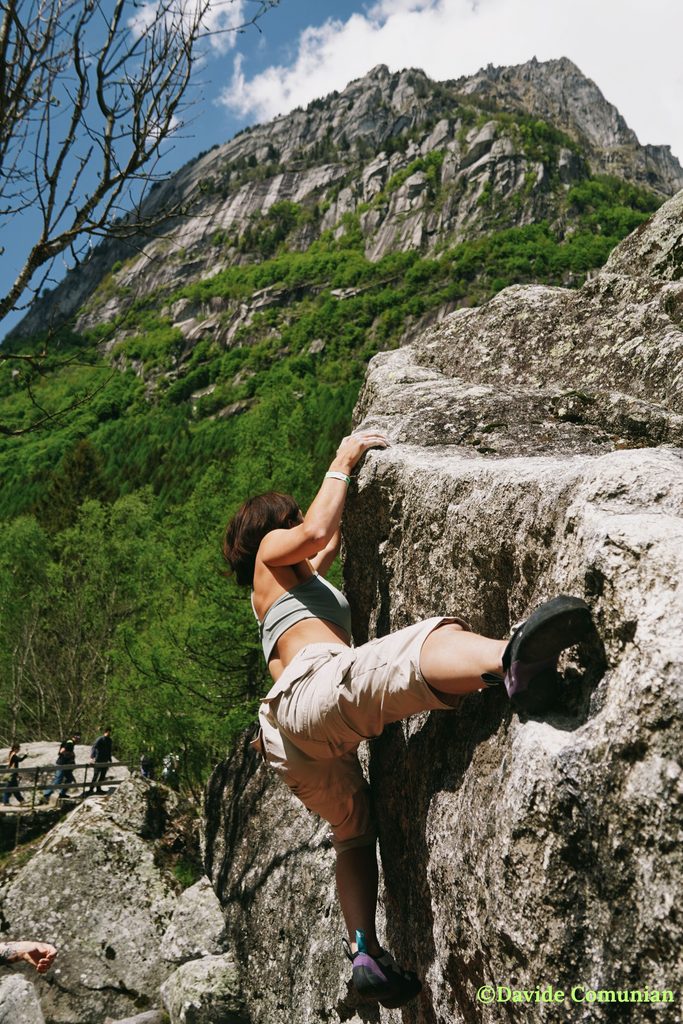
#2 Rock Climbing or Bouldering
Evidence: empirical and theoretical
Timeline: cumulative
Why it works: Rock climbers were one of Csikszentmihalyi’s original study groups, so we’ve known for 50 years that it reliably produces flow. Mechanistically, the real physical stakes of climbing seem to force complete attentional absorption in the moment, leaving little room for anxious thoughts to intrude.
How to do it on a Tuesday: You do have to leave the house for this one, but you likely don’t have to go very far. If you live in or near any mid-sized city, there is at least one rock-climbing gym nearby (usually more). Memberships range from $100–150 per month.
#3 Cold Water Immersion
Evidence: early empirical, theoretical, and strong anecdotal
Timeline: acute
Why it works: Cold water immersion doesn’t induce flow state in the strictest sense. There’s no skill being exercised, no challenge to rise to. But it shares flow’s most anxiety-relevant feature: total, involuntary presence. Additionally, cold water splashed on the face triggers our dive reflex, an involuntary trigeminal-to-vagus-nerve pathway that raises heart rate variability (HRV) within seconds. Low HRV is a well-established marker of anxiety, so raising it is a plausible signal that anxiety is reduced.

How to do it on a Tuesday: This one is so accessible. Simply dunk your face in a bowl of ice water for 15–30 seconds, eyes and cheekbones submerged. A cold shower or an ice pack to the upper portion of the face works too.
Caution: Skip cold water therapy if you have a heart condition.
#4 Pottery & Clay Work
Evidence: empirical
Timeline: acute and cumulative
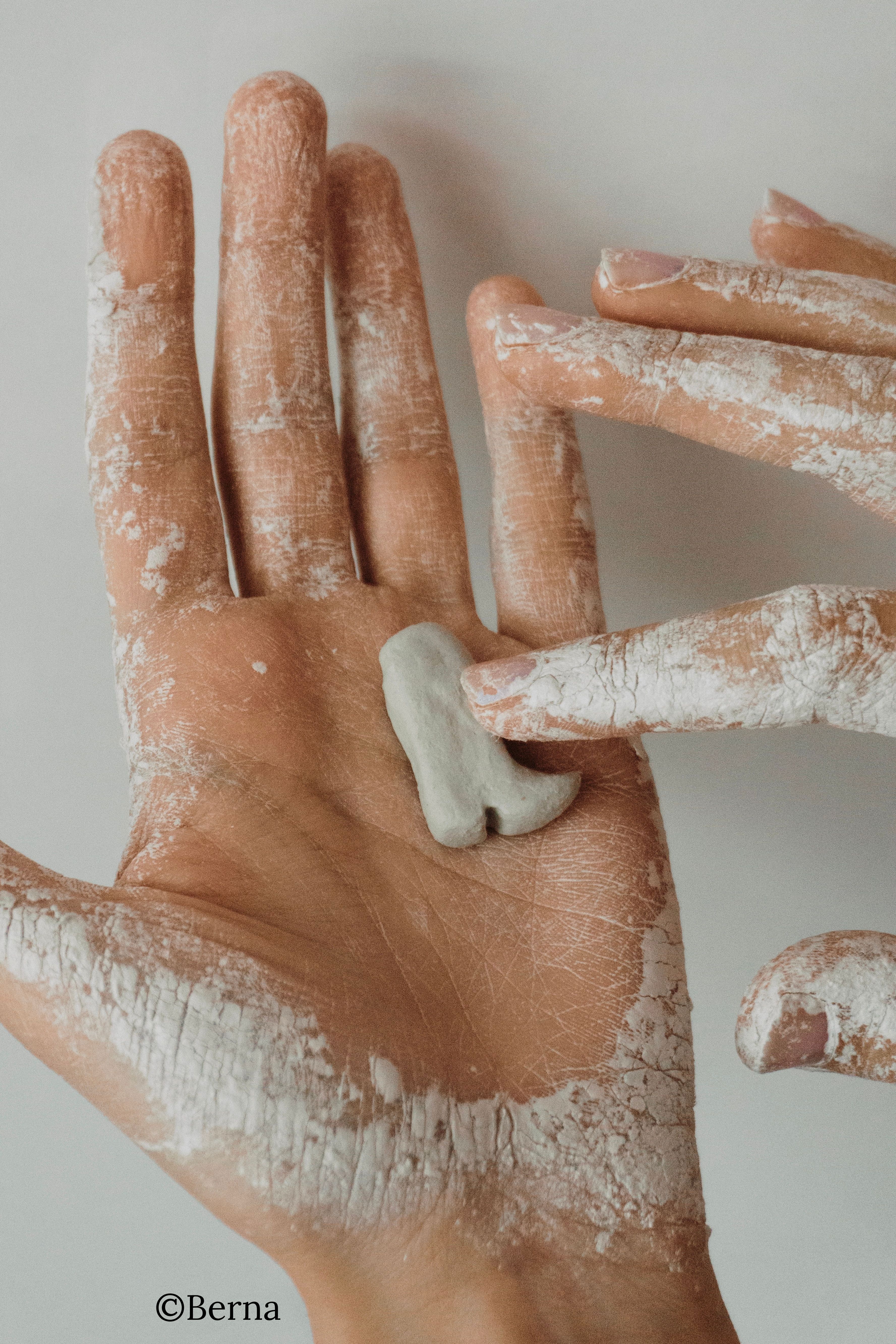
Why it works: Researchers speculate that clay’s creative, open-ended quality, combined with the structure of working toward a clear goal, may be what makes it effective in reducing anxiety symptoms.
How to do it on a Tuesday: A bag of air-dry or basic clay and 15 minutes at your kitchen table is enough—this is exactly what the studies tested.
#5 Table Tennis
Evidence: empirical (elite players), anecdotal (recreational players)
Timeline: acute, cumulative
Why it works: Split-second reaction windows leave no room for internal monitoring and pull attention entirely outward. Evidence suggests the better you get at playing table tennis, the more complete the flow state.
How to do it on a Tuesday: An internet search for “table tennis near me” will turn up some surprising results: community centers, local bars and breweries, public parks, and dedicated table tennis clubs. You may also find that other fast-reaction-window sports like wall-ball and squash produce a flow state for you.

Finding Grounding Techniques for Anxiety at CooperRiis
There is no single best way to access the present moment. What absorbs one person completely may leave another restless or bored, which is why everyone needs to do some experimentation. At CooperRiis, residential anxiety treatment gives people the time, structure, and support to discover what works for them. Residents can explore:
- Art
- Woodworking
- Gardening
- Horticulture
- Cooking
- Animal care
- Yoga
- Meditation
- Exercise
- Hiking
- Basketball
- Tennis
- Pickleball
- And more

The goal is not to become good at every activity, or any activity for that matter. We’re seeking to notice which activities quiet our internal noise, hold our attention, and bring us fully into the now. Once we know what gets us there, we’ve added a new tool for coping, healing, and thriving.